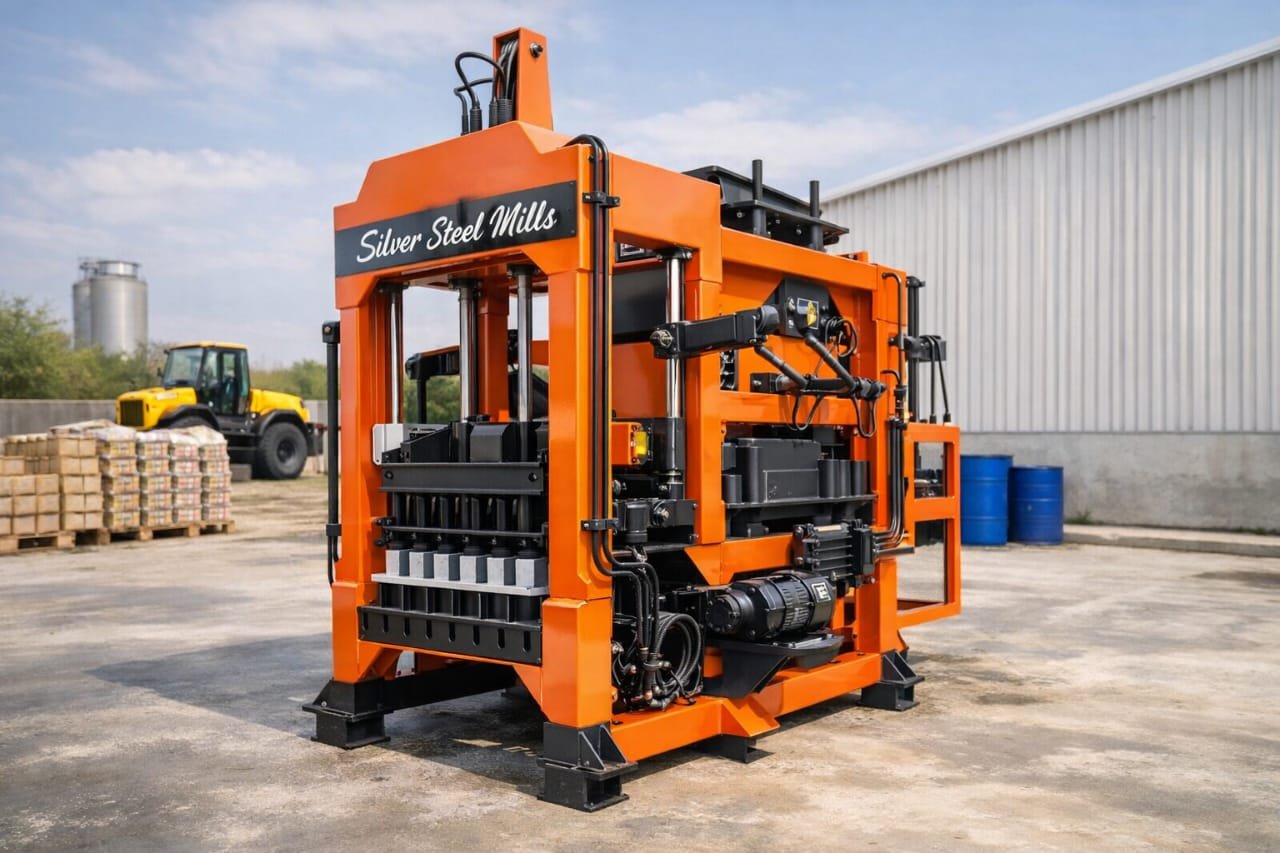
The Concrete Cornerstone: Batching Plant Benefits and Opportunities for Sale in Pakistan – A Strategic Investment Guide by Silver Steel Mills
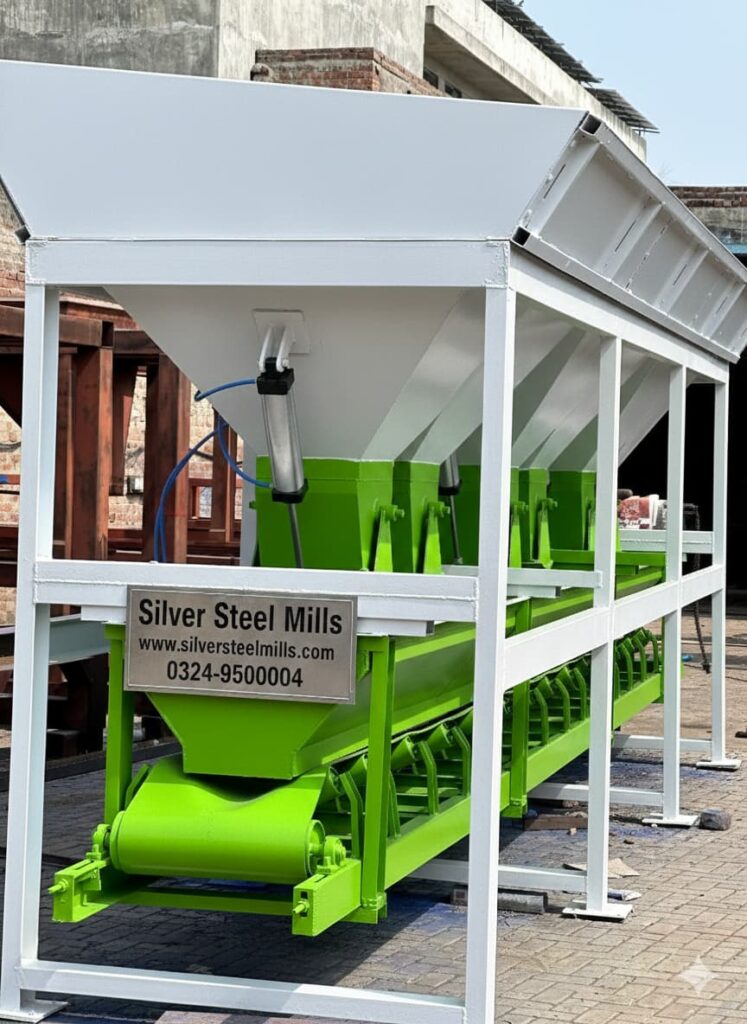
The foundation of Pakistan’s modern infrastructure—from the towering skylines of Karachi and Lahore to the sprawling CPEC road networks—is built upon a single, essential material: concrete. But the quality and consistency of this concrete are no longer left to manual labor and guesswork. They are meticulously managed by the concrete batching plant.
The investment in a batching plant is the strategic choice of a forward-thinking construction enterprise. It signifies a transition from traditional, risk-prone site mixing to automated, high-precision manufacturing.1
This comprehensive guide, presented by Silver Steel Mills (SSM)—Pakistan’s premier manufacturer of high-quality steel structures and industrial machinery—delves deep into the multifaceted benefits of owning a batching plant, explores the vibrant market for batching plant for sale in Pakistan, and ultimately, positions SSM’s technologically advanced, durable, and locally supported plants as the definitive investment for maximizing profitability and project integrity.
Part I: The Undeniable Benefits of the Concrete Batching Plant
The advantages of adopting automated concrete production equipment transcend simple volume; they fundamentally reshape a construction company’s operational efficiency, quality control, and financial viability.
1.1 Precision and Unmatched Consistency (Quality Assurance)
The foremost benefit of a batching plant is its capacity to deliver precise mix consistency, which is the single greatest determinant of structural integrity.2
- Elimination of Human Error: Manual site mixing involves volume-based estimation and inherently variable human judgment for measuring aggregates, cement, and water.3 A fully automatic batching plant eliminates this by using electronic load cells (high-precision weighing sensors) for every ingredient.4
- SSM Standard: SSM plants guarantee a weighing accuracy of $pm 1%$ for cement, water, and admixtures, and $pm 2%$ for aggregates, a standard essential for producing high-grade concrete (e.g., M40 or M50).
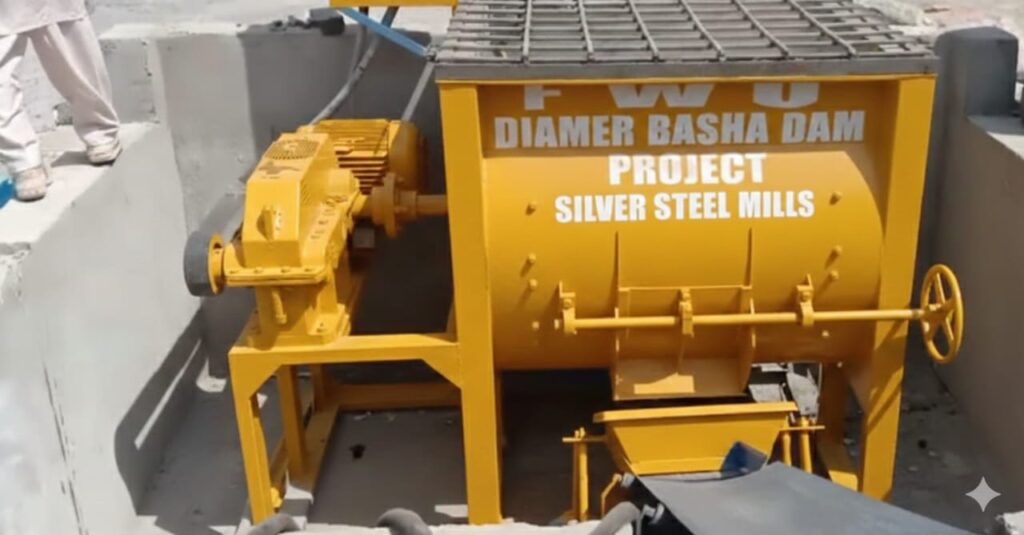
- Uniform Mixing: The key component, the mixer (typically a Twin-Shaft Compulsory Mixer), uses mechanical force to rapidly and homogeneously blend the materials.5 This results in every cubic meter of concrete having the exact same compressive strength and workability, crucial for structural safety.
- Documentation and Traceability: Modern plants, like those supplied by SSM, feature PLC (Programmable Logic Controller)-based control systems that log every batch produced.6 This electronic record includes the precise quantities of all ingredients, mixing time, and discharge time. This documentation is invaluable for quality assurance, audits, and legal compliance.
1.2 Enhanced Efficiency and Project Acceleration (Time Savings)
In construction, time is money. Batching plants significantly compress project timelines.7
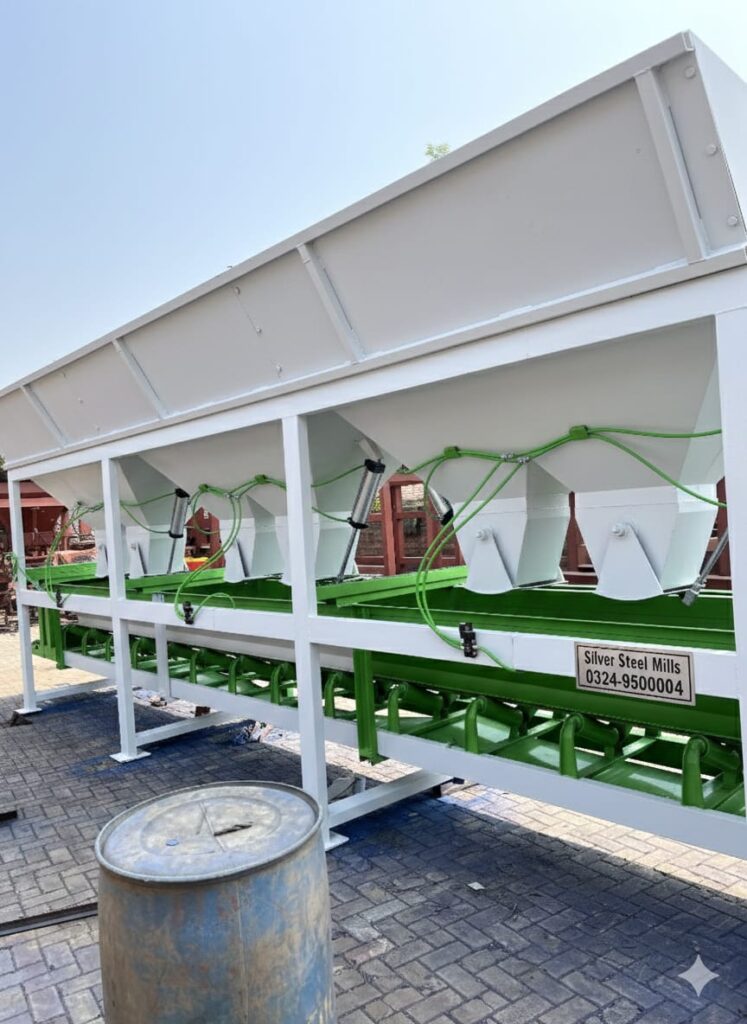
- High Production Rates: Plants are rated by their output in cubic meters per hour (8$text{m}^3/text{hr}$).9 Stationary plants can achieve outputs of 10$90 text{m}^3/text{hr}$ to over 11$200 text{m}^3/text{hr}$.12 This massive, continuous supply of ready-mix concrete (RMC) ensures that laying foundations, casting slabs, and pouring columns proceeds without delay.
- Reduced Cycle Time: Automated feeding and precise mixing times (often 30–60 seconds in a twin-shaft mixer) dramatically reduce the total cycle time per batch compared to manual methods, enabling completion of large pours in a single shift.
- Site Proximity (Mobile Plants): The mobile concrete batching plant can be quickly set up near the construction site.13 This reduces the transit time of RMC, maintaining its workability and preventing costly delays associated with traffic or long-distance hauling.
1.3 Cost-Effectiveness and Financial Gains (ROI)
While the initial investment is significant, the batching plant offers unparalleled long-term cost savings.14
- Material Wastage Reduction: Cement is the most expensive component. Manual mixing often results in over-dosing cement to compensate for poor mixing or accidental spillage, leading to up to $10%$ wastage. Automated plants eliminate this, resulting in substantial savings on material costs.15
- Labor Cost Reduction: A fully automated plant requires only one or two operators, dramatically reducing reliance on a large, inconsistent labor force required for manual batching, shoveling, and wheelbarrow transport.16
- Competitive RMC Pricing: By optimizing material usage and production speed, RMC producers using high-quality plants can offer competitive ready mix concrete price in Pakistan, capturing a larger market share and maximizing profit per cubic meter.
1.4 Versatility and Mix Design Flexibility
The modern plant is capable of producing a vast range of concrete types for specialized applications.17
- Custom Mixes: The PLC control system allows operators to store dozens of custom recipes (mix designs).18 Whether a project requires standard C20 for a residential floor or high-strength C60 for a skyscraper column, the recipe can be selected instantly.
- Specialized Concrete: Batching plants are essential for producing advanced concrete types:
- Self-Compacting Concrete (SCC): Requires precise admixture dosing.
- Roller-Compacted Concrete (RCC): Low-slump concrete required for dams and paving.
- Fibre-Reinforced Concrete: Requiring efficient dispersal of fibers in the mix.
1.5 Safety and Environmental Compliance
- Enhanced Worksite Safety: Centralizing the mixing process reduces on-site clutter, vehicle traffic (cement trucks, aggregate loaders), and minimizes manual handling of corrosive materials like dry cement and lime, thereby improving overall site safety.19
- Sustainable Practices: Modern plants are designed with environmental features:20
- Dust Collection: Specialized filters prevent cement and aggregate dust from polluting the air.21
- Slurry Water Recycling: Advanced plants can integrate systems to reclaim and reuse wash-down water, conserving precious resources.
Part II: The Batching Plant for Sale in Pakistan Market Dynamics
The market for batching plant for sale in Pakistan is defined by capacity, technology, and the crucial distinction between local manufacturing and imports.22
2.1 Market Segmentation by Capacity ( $text{m}^3/text{hr}$ )
Pakistani contractors select plants based on their project size:
| Plant Capacity | SSM Model Example | Application Scope in Pakistan |
| $25 text{m}^3/text{hr}$ (Mini Mobile) | SSM-25 | Small-scale builders, precast element manufacturing, housing society projects. |
| $60 text{m}^3/text{hr}$ (Mobile) | SSM-60 | Road construction, bridge decks, mid-sized RMC businesses, frequent relocation. |
| $90 text{m}^3/text{hr}$ (Stationary) | SSM-90 | Dedicated city RMC supplier, large commercial buildings, industrial zones. |
| $120 text{m}^3/text{hr}$+ (High-Capacity) | SSM-120/180 | Major CPEC projects, dam construction, infrastructure mega-projects. |
2.2 Price Analysis: Batching Plant Price in Pakistan (2026 Estimates)
The batching plant price in Pakistan is primarily driven by the steel market, component origin, and level of automation. The market offers a wide range:
| Type of Plant | Capacity (m3/hr) | Estimated Price Range (PKR) – Ex-Factory |
| Mini Mobile (Semi-Auto) | $20 text{m}^3/text{hr}$ | PKR 4.0 Million – 7.5 Million |
| Mobile Batching Plant (Fully Automatic) | $60 text{m}^3/text{hr}$ | PKR 14.0 Million – 20.0 Million |
| Stationary Batching Plant (Fully Automatic) | $90 text{m}^3/text{hr}$ | PKR 25.0 Million – 38.0 Million |
- Note on Pricing: These prices typically include the main structure, the mixer, the aggregate dosing system, and the control panel. They often exclude the crucial cement silo (which can add PKR 2 Million to 5 Million), civil works, and transportation.
2.3 Local Manufacturing vs. Imported Brands
Contractors face a choice between the high-profile but costly imported brands (often Turkish, Chinese, or European) and the robust, supported local manufacturers.
- Imported Plants: Offer advanced automation but suffer from extremely high initial costs (due to duties and USD/PKR exchange rates) and debilitating downtime due to slow, expensive sourcing of replacement parts.
- Local Manufacturers (Silver Steel Mills): SSM capitalizes on using superior, locally sourced, certified steel for the structure and frame, paired with high-quality imported PLC, load cells, and gearboxes. This hybrid approach offers global quality performance at a competitive, locally sustainable price, coupled with immediate parts and service availability.23
Part III: Technical Specifications and Critical Components
A buyer must look beyond the capacity rating and scrutinize the core components that determine the machine’s lifespan and output quality.24
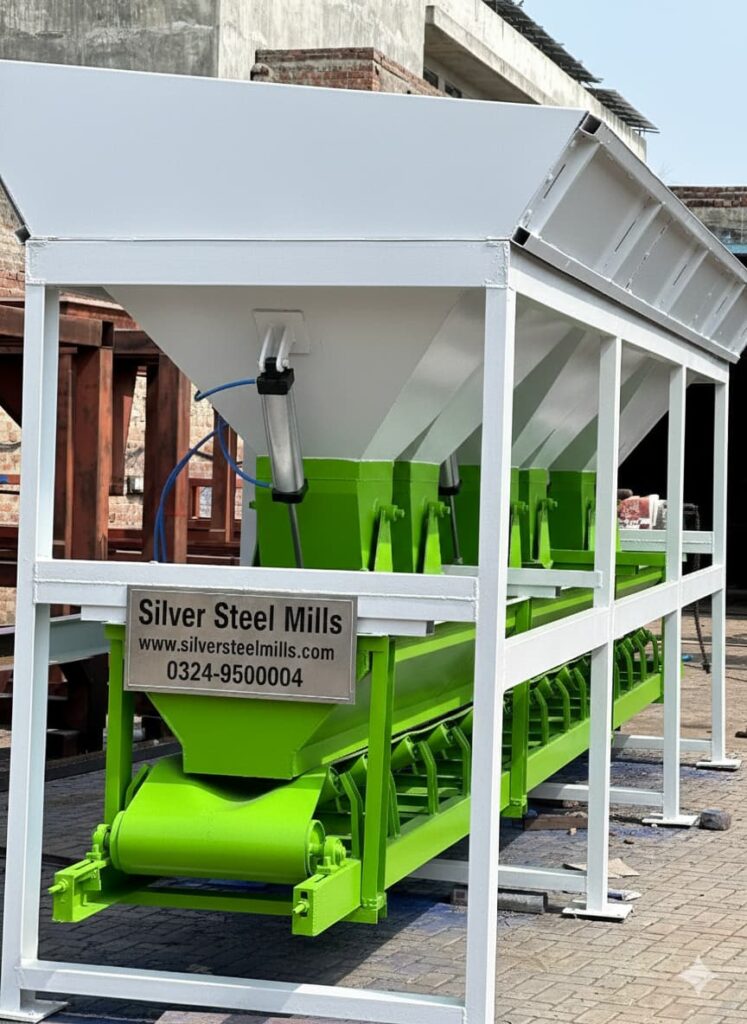
3.1 The Mixer Technology: Twin-Shaft Compulsory Mixer
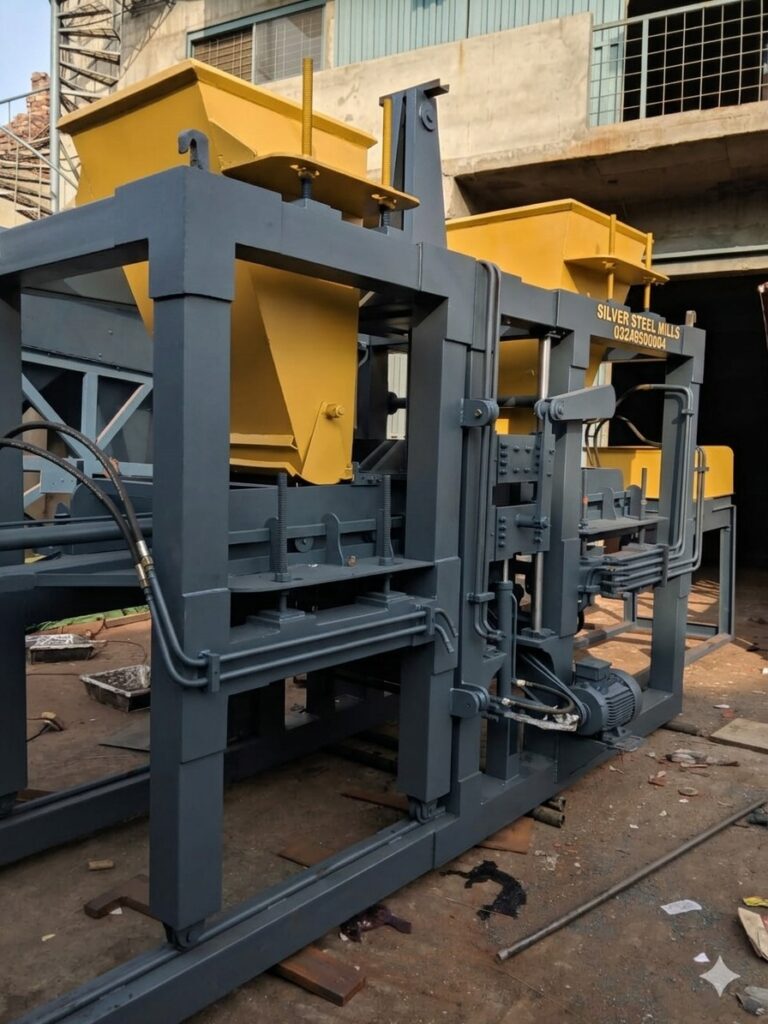
For RMC and high-grade concrete in Pakistan, the Twin-Shaft Mixer is the industry gold standard, and the type universally adopted by SSM for its medium-to-large capacity plants.25
- Principle: Two horizontal shafts rotate in opposite directions.26 Paddles attached to the shafts create a highly turbulent mixing zone, ensuring rapid and homogenous blending of all materials.
- SSM Quality Check: SSM utilizes high-wear-resistant alloy steel (e.g., high-chrome cast iron) for the mixing paddles and liners. This is critical because Pakistani aggregates (like Margalla or Sargodha crush) are highly abrasive.
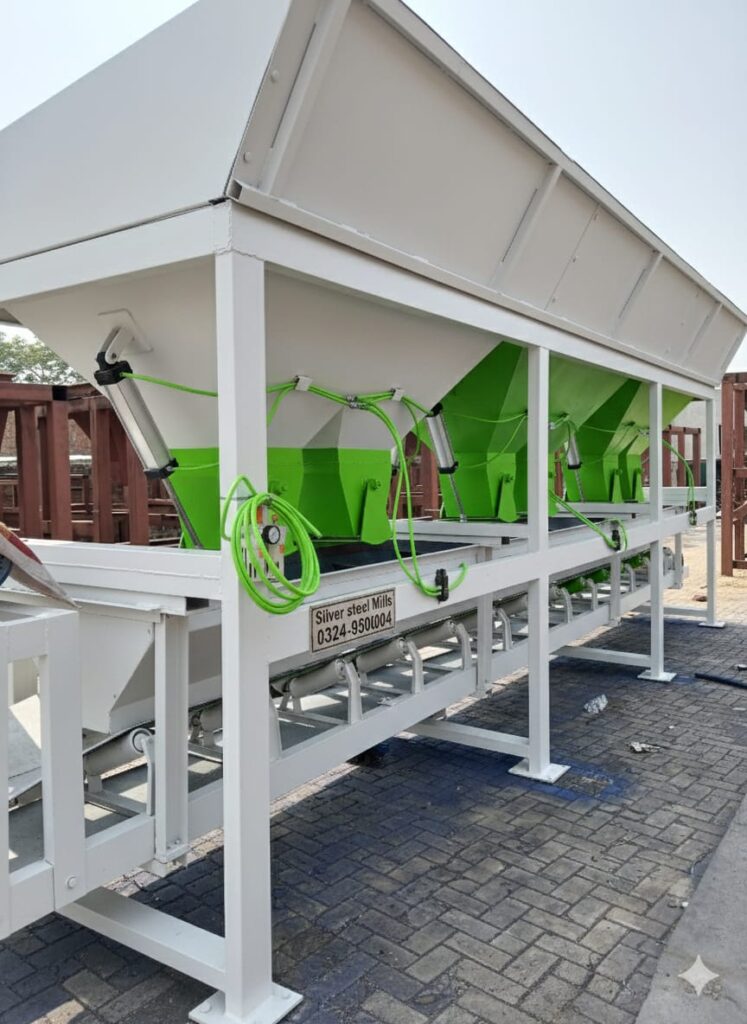
3.2 Dosing System and Load Cells
Accuracy of measurement is the core benefit of the batching plant.27
- Independent Weighing: All SSM plants use separate weighing systems for each major component to prevent cascading measurement errors:
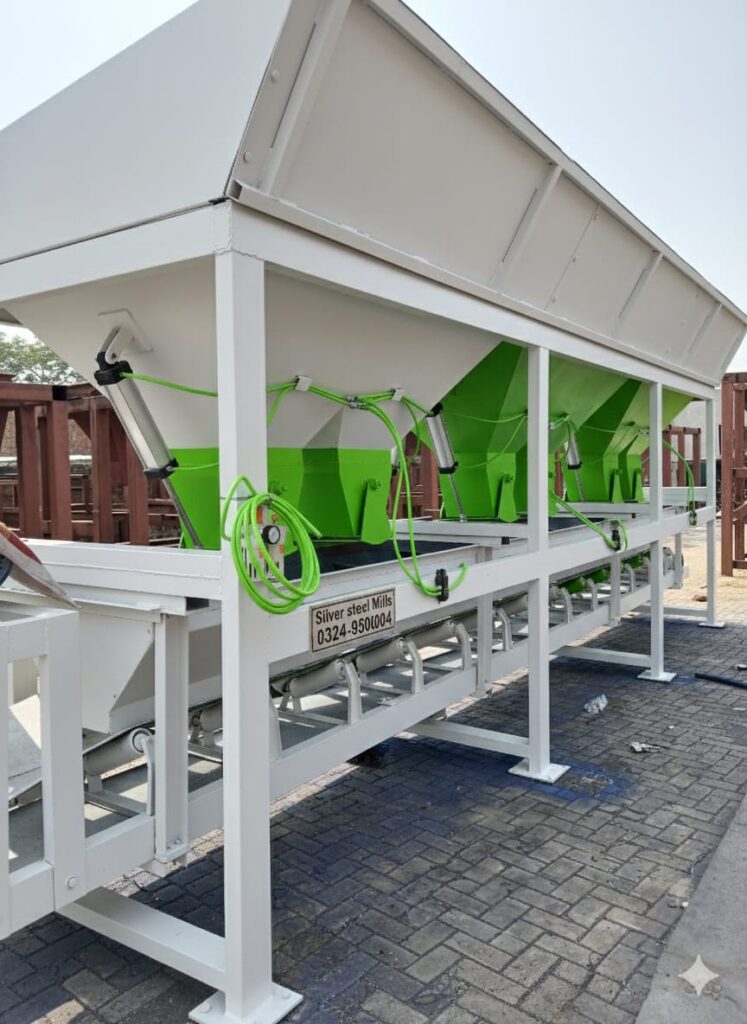
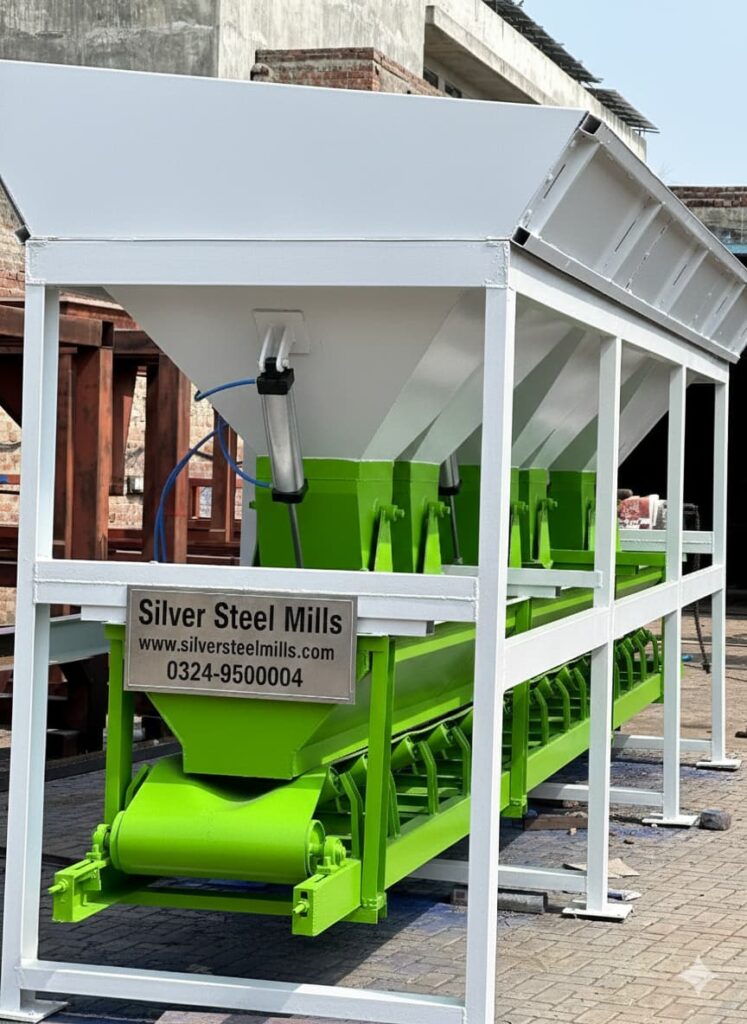
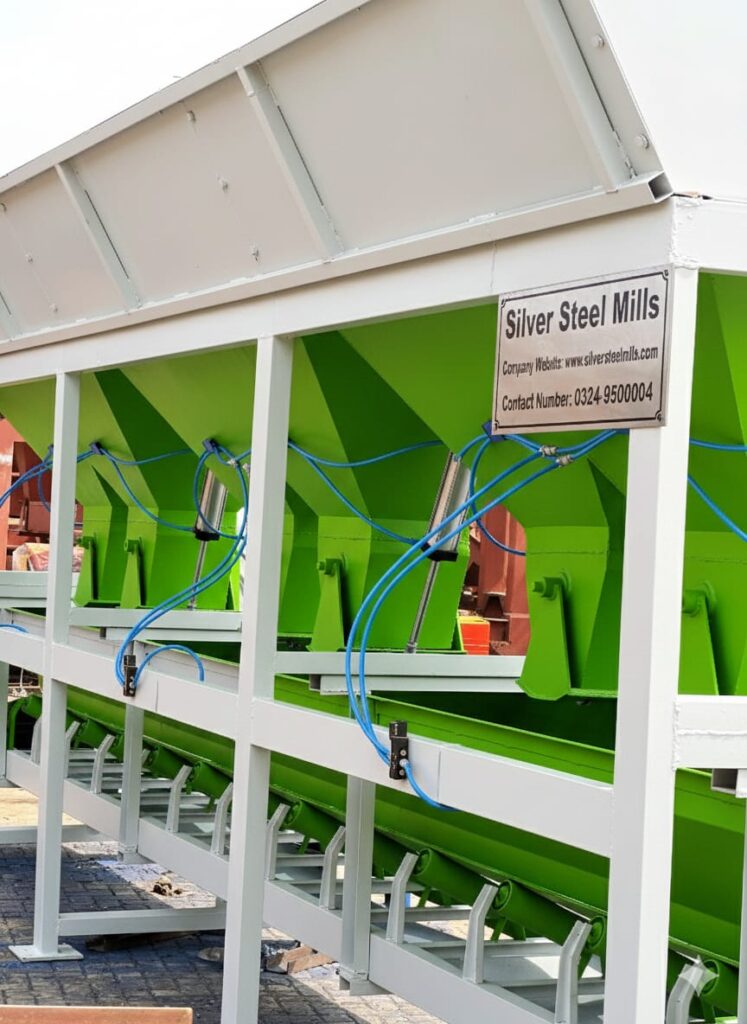
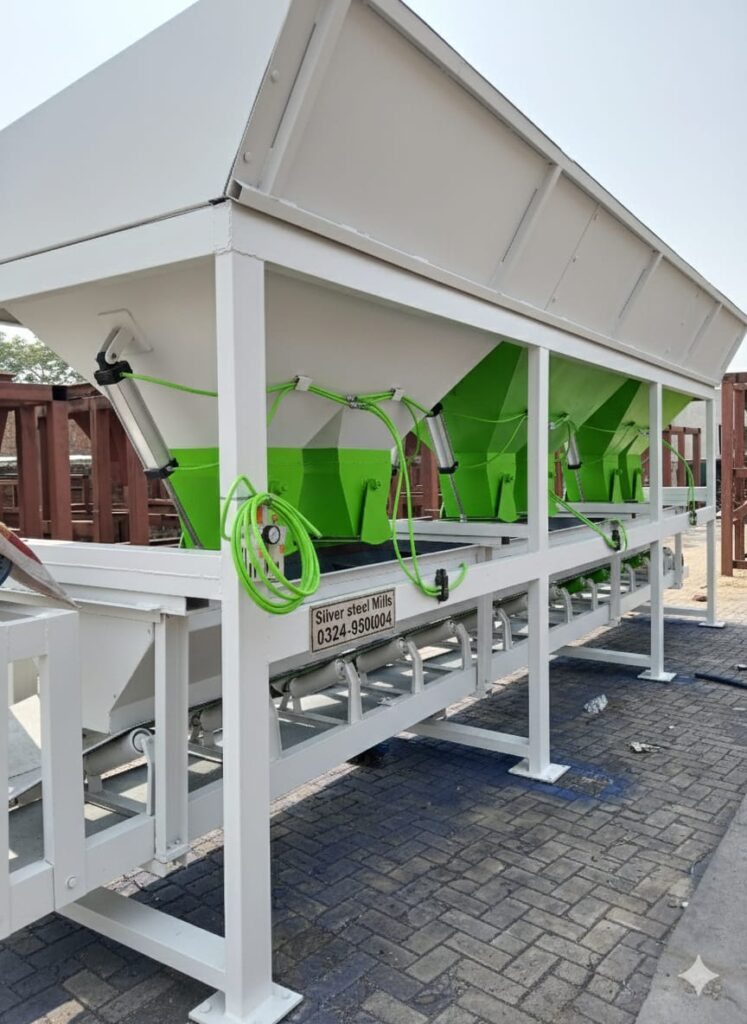
- Aggregate Weighing: Under the aggregate bins or on a conveyor.
- Cement Weighing: Dedicated hopper under the cement silo.
- Water Weighing: Tank with a sensitive pump/valve system.
- Admixture Dosing: Small, highly accurate weighing system for chemicals.
- Load Cells: SSM ensures the use of reliable, branded (often European or Korean) digital load cells, as their failure directly compromises concrete quality and leads to costly production halts.28
3.3 Aggregate Feeding: Skip Hoist vs. Conveyor Belt
The method used to transport aggregates to the mixer influences the plant’s height and speed.
- Skip Hoist: Used primarily for mini mobile concrete batching plant (up to $60 text{m}^3/text{hr}$). Pros: Compact footprint, lower installation cost.29 Cons: Slower, subject to more wear.
- Conveyor Belt: Used for high-capacity stationary plants (90 $text{m}^3/text{hr}$ and above). Pros: Faster, continuous flow, minimal downtime. Cons: Larger site footprint, higher initial structural cost.
3.4 Cement Silos
Silos are required for bulk storage and must be integrated into the plant design.30
- Types: SSM offers both Welded Silos (shipped as one unit, faster erection) and Bolted Silos (shipped disassembled, ideal for export or sites with restrictive access).
- Capacity: Ranges from 50 Tons for small plants to 300 Tons for large RMC operations, ensuring continuous supply.
Part IV: The Silver Steel Mills (SSM) Definitive Advantage
Choosing Silver Steel Mills for your batching plant in Pakistan is a strategic decision that guarantees quality, reliability, and local support unmatched by importers.
4.1 Unbreakable Core: In-House Steel Manufacturing
As a premier steel fabrication company in Pakistan, SSM controls the quality of the primary plant structure from the molten steel stage.
- Certified Steel Grades: SSM structures utilize high-tensile steel, ensuring superior strength, yield capacity, and fatigue resistance essential for machinery that undergoes constant vibration and heavy loading.31
- Design Optimization: SSM engineers use advanced CAD/CAM software to optimize the structural design, minimizing unnecessary steel weight (reducing the overall batching plant price in Pakistan) without compromising stability or safety.
- Durability and Anti-Corrosion: Every structural component is treated with industrial-grade anti-corrosion paint or galvanization to withstand the abrasive nature of cement dust and the high humidity and heat cycles common across Pakistan.32
4.2 Comprehensive Turnkey Solutions and Integration
SSM offers a holistic approach, reducing the client’s burden of managing multiple vendors.
- Site Consultation and Civil Works: SSM provides precise foundation drawings and site layout recommendations, ensuring the plant is installed correctly, eliminating foundation errors that can lead to costly structural issues later.
- Integration with Infrastructure: SSM leverages its expertise as a steel shed manufacturer in Pakistan to design and erect protective PEB Sheds over the aggregate storage areas.33 This prevents moisture ingress from rain, which is crucial for aggregate consistency and for maintaining the accuracy of the moisture compensation system.
- Fast Installation and Commissioning: Local teams are deployed for fast, bolt-together erection of the PEB structure. SSM technicians handle the electrical, mechanical, and software commissioning, ensuring the plant is operational in the shortest possible time.34
4.3 Unrivalled Local Support and Warranty
The biggest risk in the RMC business is plant downtime.
- Immediate Parts Availability: Unlike importers who rely on shipping parts from abroad (often taking weeks), SSM maintains a large, local inventory of all high-wear and critical components (mixer blades, seals, load cells, sensors) at its facilities in Punjab. This translates to hours, not weeks, of downtime.
- Local Expert Technicians: SSM’s specialized technical team is located within Pakistan, providing faster diagnostics, on-site repairs, and operator training specifically tailored to local raw materials and operational challenges.35
- Genuine Local Warranty: SSM provides a comprehensive, bankable local warranty covering both the steel structure and critical components, offering true peace of mind to the investor.
Part V: Financial and Operational Success with SSM Plants
Investing in an SSM batching plant is a calculated financial move with high profit potential.
5.1 ROI and Profit Maximization
The ROI of an SSM plant is driven by its reliability and precision.
- Guaranteed Output: The robustness of the SSM structure and the reliability of its components ensure consistent running hours, maximizing the annual $text{m}^3$ output.
- Premium Pricing for Quality: RMC customers (especially government contractors and high-rise developers) are willing to pay a premium for guaranteed high-grade concrete. The batch report (COA) from the SSM control system acts as a premium certificate of quality.
- Cement Consumption Savings: The precise batching control can save $5%$ or more on cement consumption compared to semi-automatic plants, turning a multi-million-rupee expense into significant annual savings.
$$text{Annual Savings} = (text{Total Annual } text{m}^3 times text{Cement Content per } text{m}^3 times text{Wastage Saved}) times text{Cement Price}$$
5.2 Silver Steel Mills Batching Plant Price in Pakistan Comparison (Illustrative)
SSM’s competitive pricing leverages local manufacturing, making high-quality automation accessible.
| Plant Feature | Local Manufacturer (SSM) | Imported Chinese Brand |
| 60 $text{m}^3/text{hr}$ Price (Approx.) | PKR 14M – 16M | PKR 20M – 25M (Due to duties/shipping) |
| After-Sales Support | Immediate, local technicians, local parts. | Delayed, expensive parts shipped from China/Turkey. |
| Steel Structure Quality | Guaranteed High-Tensile Steel (in-house). | Variable, often lower-grade steel. |
| Total Lifetime Cost (TCO) | Low (Due to minimal downtime). | High (Due to prolonged maintenance delays). |
Conclusion: The Future of Concrete Production is Automated and Local
The era of manual, inconsistent concrete mixing in Pakistan is over. The country’s ambitious infrastructure goals—from high-speed rail to next-generation power projects—demand the precision, speed, and reliability only a fully automated concrete batching plant can provide.
For any enterprise looking to dominate the Ready Mix Concrete (RMC) or large-scale construction sector, the choice is clear: investing in a high-quality, locally supported plant minimizes operational risk and maximizes profitability.
Silver Steel Mills offers not just a machine, but a complete, warranted, and locally supported solution.36 By combining superior, in-house fabricated steel structures with world-class automation components, SSM delivers the best value for every batching plant for sale in Pakistan.
Secure your construction future. Choose the reliability and expertise of Silver Steel Mills—the cornerstone of Pakistani infrastructure.
